The Wii's Forgotten Tag Fighter: Tatsunoko vs. Capcom and the Benefits of Niche Fighting Games
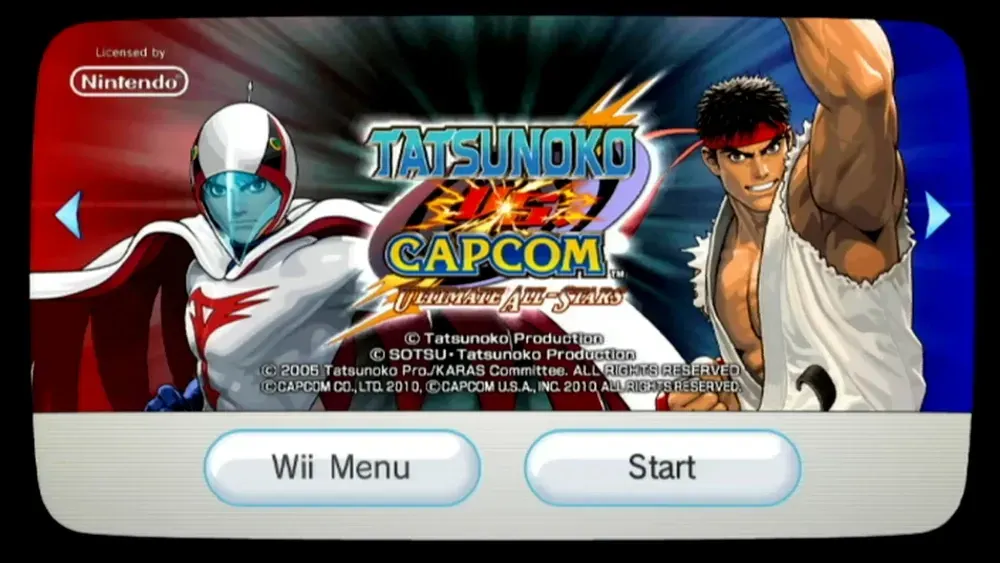
Pay heed now, as I tell you the tale of the weirdest little tag fighter Capcom ever made, which also happened to be one of the few 2d fighters released for the Wii. Welcome to Niiche Wiik!
It’s easy to forget this now that the genre is back in the big leagues, but a big chunk of the 2000s was tough for the traditional 2d fighting game. In the 90s, they were big business, but the early 2000s saw them lose substantial market space to 3d fighters like Tekken, Soul Calibur, and Virtua Fighter. Even 2d franchises like Mortal Kombat dabbled in the 3d realm in those years. The 3d fighter wasn’t invented in the 2000s, but it was certainly ascendant then.
Capcom’s classic era came to a close in 2001, with the release of Capcom vs. SNK 2, a modestly well-received game that nonetheless failed to capture the highs of Capcom’s golden days. From then until 2008, the only new 2d fighter released for arcades or console was Capcom Fighting Evolution in 2004. It was supposed to be the future of the company and the genre, with a roster combining characters from multiple Street Fighter iterations, Darkstalkers, and the niche Red Earth. But instead, the game flopped, ushering in a four year dry spell for the company's most iconic genre.
All that changed in 2008, which saw the release of two new Capcom-created 2d fighters on console. One is the iconic Street Fighter IV, which firmly ushered the franchise into the modern era. But the other was an odder duck, the product of an agreement with a venerable Japanese animation powerhouse that nobody stateside had ever heard of. The game was called Tatsunoko vs. Capcom, and it was a console exclusive for the Nintendo Wii.
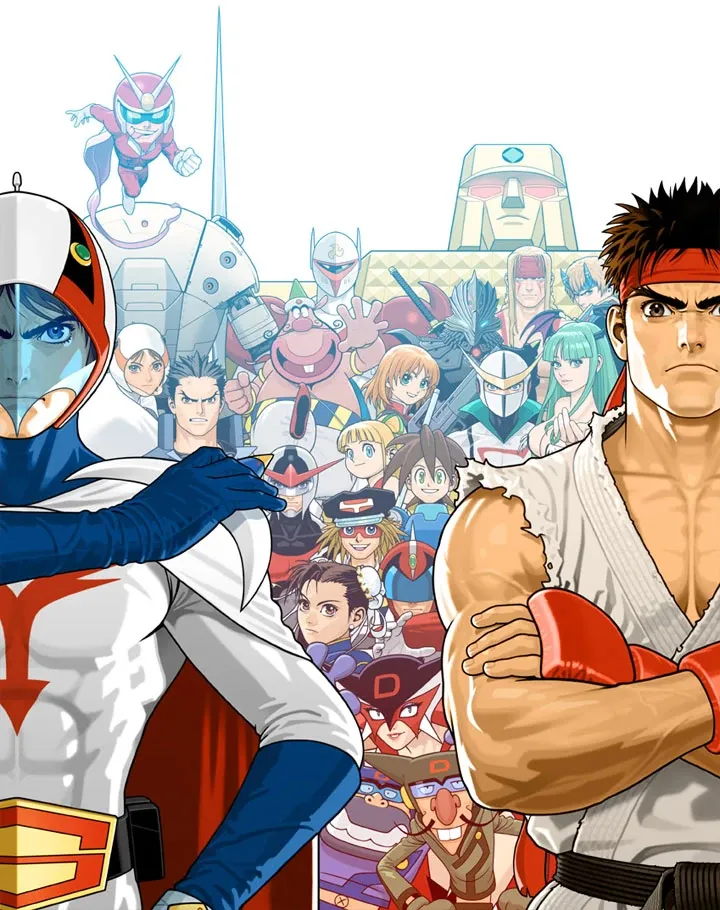
Tatsunoko is one of those companies that’s a pretty big deal in Japan, but has less of a footprint outside of it, especially in the US. Nonetheless, it was a bit of a weird pick for a Capcom Vs. game, namely because Tatsunoko doesn’t make video games. Their whole deal is anime, with a lot of it being pretty old school.
For the average American, there are only a few Tatsunoko productions they might have heard of.
First, they co-produced Neon Genesis Evangelion with Studio Gainax. That would’ve been really awesome for the game…if there were any Evangelion characters. But there are not.
Second, they made SuperBook (the explicitly Christian anime series co-produced with the American Christian Broadcasting Network). This is only notable to me in that SuperBook was probably the first anime I ever saw, on account of some old VHS tapes my conservative Christian parents had when I was a kid. But again, no characters from SuperBook made it into the game, although it would have been hilarious if they did.
Third, Tatsunoko was the creative force behind Speed Racer, the one fairly mainstream product for the American market. But yet again, cool as it would've been to play as the Mach V somehow, there is no representative from Speed Racer in Tatsunoko vs. Capcom. A shame too, given that the cult classic Speed Racer film by the Wachowskis released in 2008 as well.
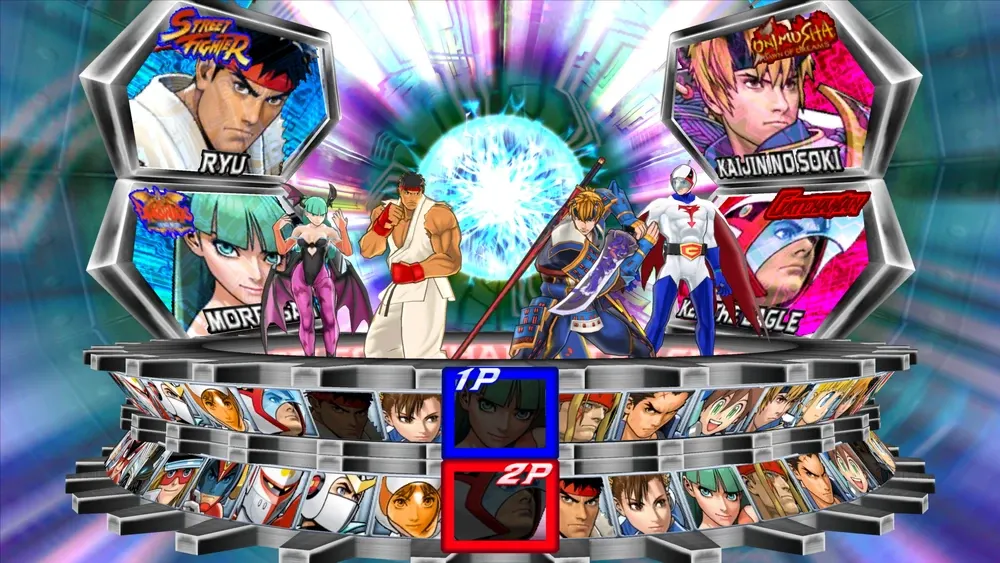
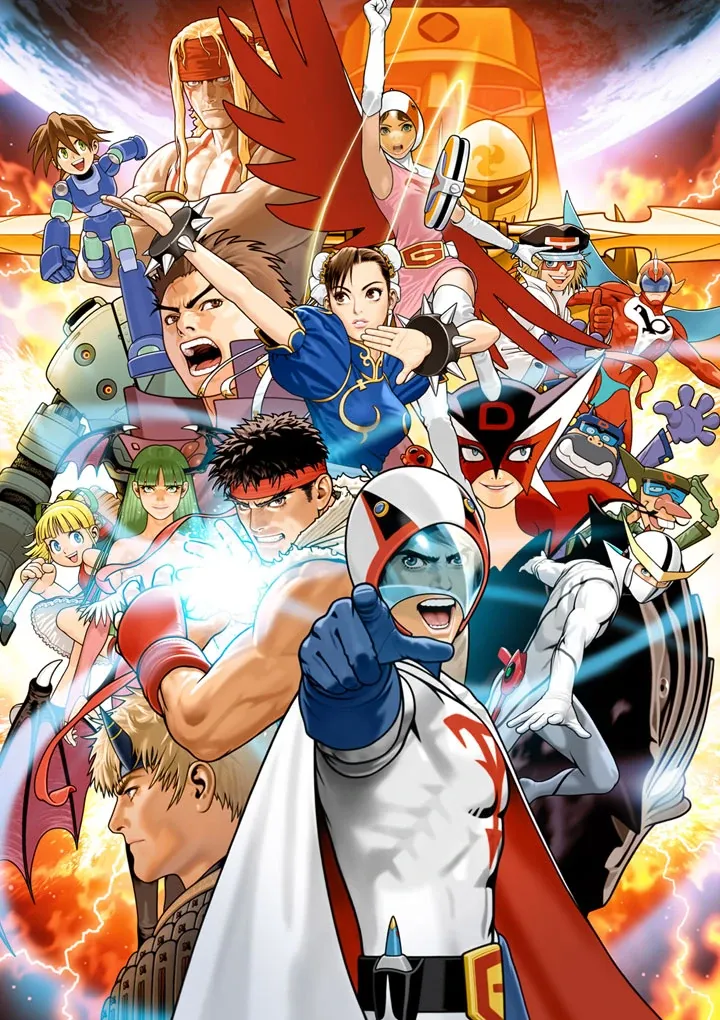
The roster was the most bizarre thing Capcom had ever conceived (and I’m counting the 90s Jojo’s Bizarre Adventure fighting game).
You had your Tatsunoko representatives, which included more than a few deep cuts. The roster pulls from series as far back as the 70s (such as Casshan), all the way up to the mid-2000s (Karas). But with the exception of some anime old heads who might be familiar with Science Ninja Team Gatchaman and Tekkaman, English-speaking audiences wouldn’t recognize any of the characters.
Capcom’s own representatives weren’t quite A-list either. There are a few mainstays, to be fair, but fewer than one would anticipate. Morrigan from Darkstalkers makes an appearance, although she’s the only one from her franchise to make it. And there are only THREE Street Fighters in play, though they are the faces of the franchise at the time. Ryu, Chun-Li, and Alex are respectable admissions from THE fighting game franchise, but there are just far fewer than prior VS. games, where Street Fighter reps often verged on or exceeded double digit roster slots.. Batsu from Rival Schools rounded out the roster of established fighting game characters, and that was it. Everybody else hailed from a different genre entirely.
There were Mega Man representatives, but they weren’t the first stringers by any stretch. There was no Mega Man, no X, and no Battle Network MegaMan either (notable because he was kind of a big deal in the 2000s). Instead, the game featured Volnutt (from Legends), Roll, and Zero (but only for the international release).
Much of the rest of the roster is like that as well. There’s nobody from Resident Evil, but there is a rep from Onimusha. There was also no Strider Hiryu, no Captain Commando, nobody from Final Fight. Yami, from Ōkami, makes the cut as a non-playable final boss, but Amaterasu is not among the ranks of the playable characters. The roster was lean, with a lot of obvious picks left on the cutting room floor.
There are a few inclusions that were relevant at the time, but feel incredibly quaint today. Frank West (of Dead Rising fame) manages to make it in for the international release, as does a mech from Lost Planet. The eponymous henshin hero of Viewtiful Joe also makes the cut. What’s fascinating to see is what huge franchises for the coming decades were stiffed. The Devil May Cry franchise has not a single entrant to its name, even though 4 had released earlier in 2008. Monster Hunter didn’t get any love either, shockingly.
The wildest addition has to be Saki, a character from a Japan-only hybrid quiz-game/dating sim called Quiz Nanairo Dreams. I know basically nothing about the game, but for some reason she looks like Asuka Langley Soryu from Neon Genesis Evangelion (which, again, was co-produced by Tatsunoko) with the serial numbers filed off, and that made me like her.
Overall, a deeply weird roster. One that was going out to the broadest gaming audience to ever exist, with tons of young players, but whose cast would be 90% unrecognizable to anybody born after 1989.
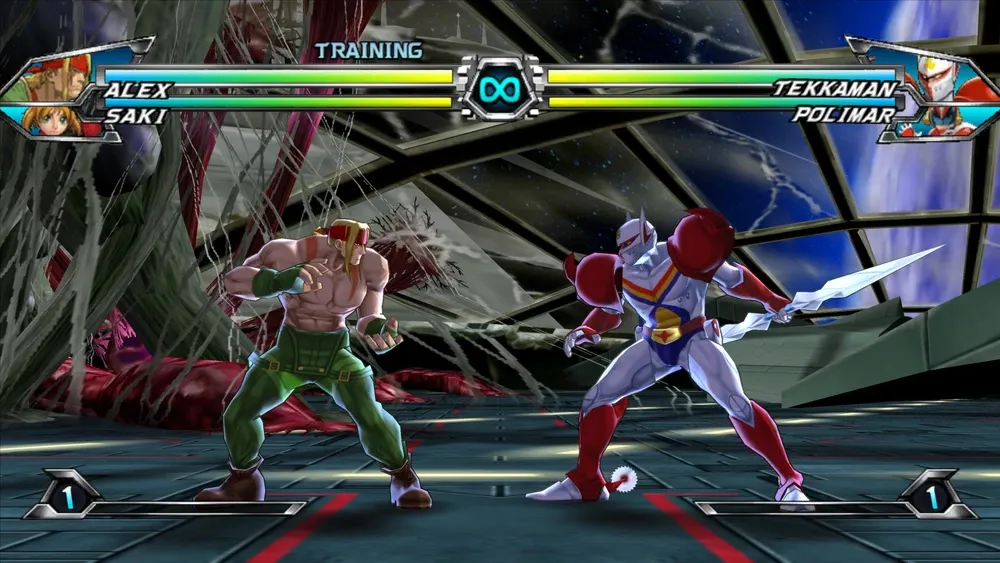
So if the game didn’t have name recognition going for it, what did it have? Well…not nothing. For one, the gameplay was innovatively simple.
TvC streamlines the business of fighting in a number of crucial ways. It’s still a tag fighter like Marvel vs. Capcom, but it’s 2v2 vs. 3v3. The button layout is simplified, with a light, medium, and heavy attack button, as well as a dedicated button for calling in your tag partner. More complex input mostly combine the buttons with directional inputs on the stick or d-pad. The result is a game where it’s pretty easy to pull off flashy combos and feel like a badass, even when you’re little better than a button-masher. It’s easy to see TvC’s controls as an important inflection point in the journey from the lackluster Easy modes of the 90s to Street Fighter 6’s Modern Controls.
That’s not to say there was no advanced tech to learn. While hardly the most complex tag fighter in existence, it was still a tag fighter, and it still had some stuff you needed to learn if you wanted to get good. The Baroque system served as a way to burn recoverable health to extend combos. It could be countered by a Mega Crash (or lengthened with it, if you really knew what you were doing). And that doesn’t even get into the tag fighter mechanics, with seasoned players needing to understand how to use VAR to extend combos and DHC to heighten damage from Supers.
Nonetheless, TvC was a lot easier to jump into than most of its forebears. This really paid dividends for me, personally, when I would try to get my friends to play a fighting game. Things like Marvel vs. Capcom 2 and Third Strike were always a hard sell because the learning curve was relatively steep for pick-up-and-play sessions. There was such a thing as easy mode, but it was far more limiting, and disadvantaged players fairly significantly compared to the standard control scheme (due to the lessened number of options). TvC found a fairly early sweet spot in the ongoing battle to bridge accessibility with depth, and it meant my friends were more willing to play for a while, instead of giving up the second they couldn’t pull off a sick new combo.
It was a good thing too, that my friends were more willing to try a match or three, because the single-player modes left more than a little to be desired. There was the usual arcade mode, to be sure, but with a smaller, more unfamiliar roster, it lost a bit of its luster. There are a couple variations on running the gauntlet against the rest of the cast, some gimmicky mini-games, and the obligatory multiplayer action, but that’s it.
And yet…I have exceedingly fond memories of the game. It was the first fighting game where I actually took my play online, as the North American release (subtitled Ultimate All-Stars) included online play. I remember cleaning up with Zero/Ryu, experimenting with Tekkaman Blade, and trying to figure out how the hell you were supposed to handle zoning pressure as Alex.
In a certain sense, I think TvC was the first time I really spent time in the lab for a fighting game, and therefore it was a crucial step in my personal growth as a player. I had put in my time playing a lot of games prior to its release, but I had always had guides, videos, other players to point the way forward for me. With TvC, I was putting in the work myself to figure out how to make Baroque Cancels work for me, or how to get the most out VAR corner pressure. In the same way that my time with MvC2 would set me up to utilize Delayed Hyper Combos effectively, learning to use Mega Crash was preparing me for when I discovered Guilty Gear in the coming days.
I also credit TvC with instilling my appreciation of weird, niche fighting games, a passion I carry over to today. If I hadn’t gotten a taste of the sheer weirdness of TvC, I don’t know if I would have become someone who puts hours into Melty Blood.
So yeah, Tatsunoko vs. Capcom is unquestionably niche. But it’s my niche.
I would love to pretend that the game is going to get an HD re-release, and thereby spark a revival, but I know that’s exceedingly unlikely. The licensing issues alone are a nightmare for a game that most people have never heard of. So I’ll just have to keep comboing away as Ken the Eagle myself, and await the next weird, wonderful little fighting game that happens to cross my horizon.
But for you, dear reader: if you happen to stumble across a copy of Tatsunoko vs. Capcom in the wild, and you have the money to burn, you might just find some delight in the forgotten black sheep of Capcom’s 2d fighters.