How the Street Fighter Movie Lets Down Chun-Li, and Why That’s the Problem
Disclaimer: This is not a review. Expect full spoilers, but I’m not going to talk in-depth about many specifics of the film. Other people have already discussed it better than I could. Instead, this is my attempt to grapple with the ways in which something precious to me has never actually cared to make space for me.
Let’s start at the beginning. Or at least a beginning.
My wife and I went to see the new Street Fighter movie on opening night, and we had an incredible time. I certainly didn't think it was high art, but I thought it was fun. Funny. Enjoyable in a very camp sort of way.
48 hours later, my opinion had completely flipped. I was legitimately angry when I thought about it.
I considered writing a traditional review. But ultimately, I decided my time would be better spent exploring the disconnect between my initial experience and my subsequent reevaluation.
So let's discuss what changed.
Now, for context, I am a serious Street Fighter girlie. In high school and college, fighting games were my life. Not just Street Fighter either. I have put in the years in Smash (Melee and Project M, mostly, but with a fair bit of Ultimate too), in Tekken (basically every entry since 4), in Guilty Gear (and I don’t just mean Strive), and especially in Marvel vs. Capcom (every entry, from X-Men vs. Street Fighter to Infinite). I probably have triple digit hours in at least two dozen different fighting games. I collect niche fighting games for FUN, including the copy of Capcom’s Jojo’s Bizarre Adventure for PlayStation that I just scored. I’m still waiting for another BlazBlue. I’d full-on slap my own mother for a new Darkstalkers.
I have opinions on Melty Blood.
What I’m saying is that fighting games are serious fucking business for your girl.
But even amongst all those entries in the canon of fighting games, Street Fighter was always special. Perhaps due to its role as the originator of the genre, it held a purity that other games merely danced around, an elegance in simplicity that compelled me. Even if it wasn’t necessarily my favorite, or most played, it was up there, and it occupied an outsized place in my psyche.
Now, I was late to the party. I was too young for the ‘90s heyday of the series, and since I grew up in a pretty rural area, arcade cabinets were few and far between. But I was able to get my hands on the Anniversary collection for PS2, giving me access to Hyper Street Fighter II and Street Fighter III: Third Strike. Even now, over twenty years later, I’m glad these were my gateway to the franchise.
Hyper Street Fighter II, at the time, was just about the best way to experience the original fighting game zeitgeist. That was my introduction to the most iconic era of the franchise, and it was a comprehensive one, given that it incorporated pretty much every aspect of every iteration of II. I got a chance to explore how the game developed from the ‘91 original version through the apotheosis of the game in Super Street Fighter II Turbo.
But the real draw was Third Strike. In my mind, it’s still possibly the most perfect fighting game to ever exist. It wasn’t just one thing: the music, the sprites, the very movement of the game, all of it was exquisite. But most of all, it was the parry system. It was a natural evolution of the gameplay developed through the multiple iterations of II, crafting a robust defensive option that kept you in the fight almost always, not a passive observer waiting for your opponent to let you act again. It added a raw kineticism to the matches that I still find myself yearning for.
Sorry, I digress. This isn’t about parrying, though I do have a reason for bringing it up. But to get there, I have to talk about Chun-Li.
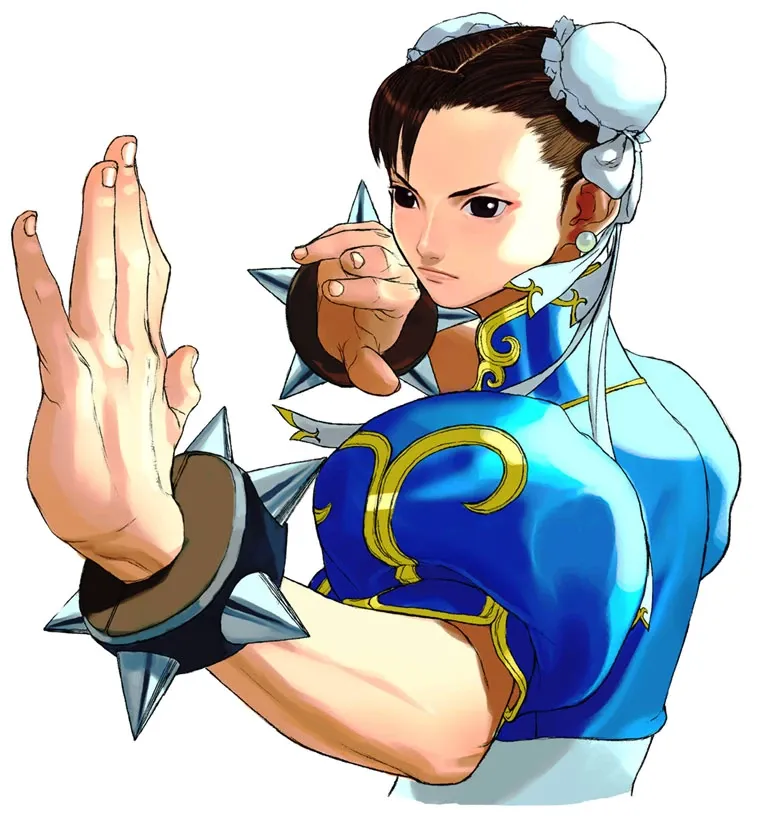
In my mind, Chun-Li is the first lady of fighting games for two reasons.
First, she was literally the first in the ways that matter. 1991’s Street Fighter II: The World Warrior was the first fighting game in the modern sense, and Chun-Li was the only woman on the initial roster. Yes, I know about Typhoon Gal. No, I don’t think it meaningfully diminishes Chun-Li’s status.
Anyway, that's the reason the world knows. But for me, there was an altogether more important explanation. Chun-Li was my personal GOAT because in Third Strike, she was a MENACE.
With the exception of Yun, she had a positive matchup against every single member of the cast. Her kit let her absolutely dominate the neutral on the ground, and her Hoyokusen was the scariest super in the game. Even in Chun-Li’s most well-known loss of the era (the iconic Evo Moment 37), the hype of the moment is entirely predicated on how unexpected and exciting the reversal is. We're expecting Justin Wong's Chun-Li to easily nab the win. When Daigo perfect parries every hit from the Hoyokusen, it's an unanticipatable display of skill.
It's like dunking on Jordan. You could do it, but at the end of the day, he was still Jordan, and you weren't.
Chun-Li could lose, but she was the one to beat.
I had never really experienced a competitive setting where a woman was the dominant force. In fact, growing up in the rural South, I hadn’t encountered any mixed-gender competitive spaces where being a woman wasn’t treated as an active liability. That had always hurt my heart in a way I couldn’t articulate as a child. Seeing Chun-Li absolutely dominate did something for my tiny, gay, woman brain. It broke another chain holding me back from who I needed to be, and entrenched a drive to not just get good at fighting games: I had to get good as a girl.
When I played Chun-Li in Third Strike, I was able to step outside my gendered preconceptions of how the world was supposed to work. Chun-Li was a woman, Chun-Li was powerful, and Chun-Li wasn’t fragile. When the men hit her, she parried their strikes and hit them right back. There was something intoxicating in not only the strength, but in the skill-based invulnerability. As long as she was on her game, they couldn’t touch her. And that meant that as long as I was on my game, they couldn't touch me either. I NEEDED that feeling.
I spent the next 20 years practicing so that I could put belt to ass as not just Chun-Li, but also as Cammy, C. Viper, Juri, Morrigan, Storm, Spiral, Psylocke, X-23, Phoenix, Nina, Jun, Asuka, Lili, Julia, Katarina, Sophitia, Xianghua, Princess Peach, Samus, ZSS, Lucina, Android 18, May, Millia, I-No, Baiken, Ramlethal, Giovanna, and, last but certainly not least, Bridget. But I always would come back to Street Fighter and Chun-Li (though I did gather a greater and greater appreciation for Cammy as I grew up and figured some stuff out).
I can’t even articulate how excited I was at the prospect of seeing my girls on the big screen. And my expectations were not too high to satisfy, I promise you. I enjoy parts of the original live action film, and not just Raul Julia’s “It was Tuesday” speech.
What I’m saying is that, by most reasonable metrics, I should have been a core part of the target audience for a new Street Fighter film.
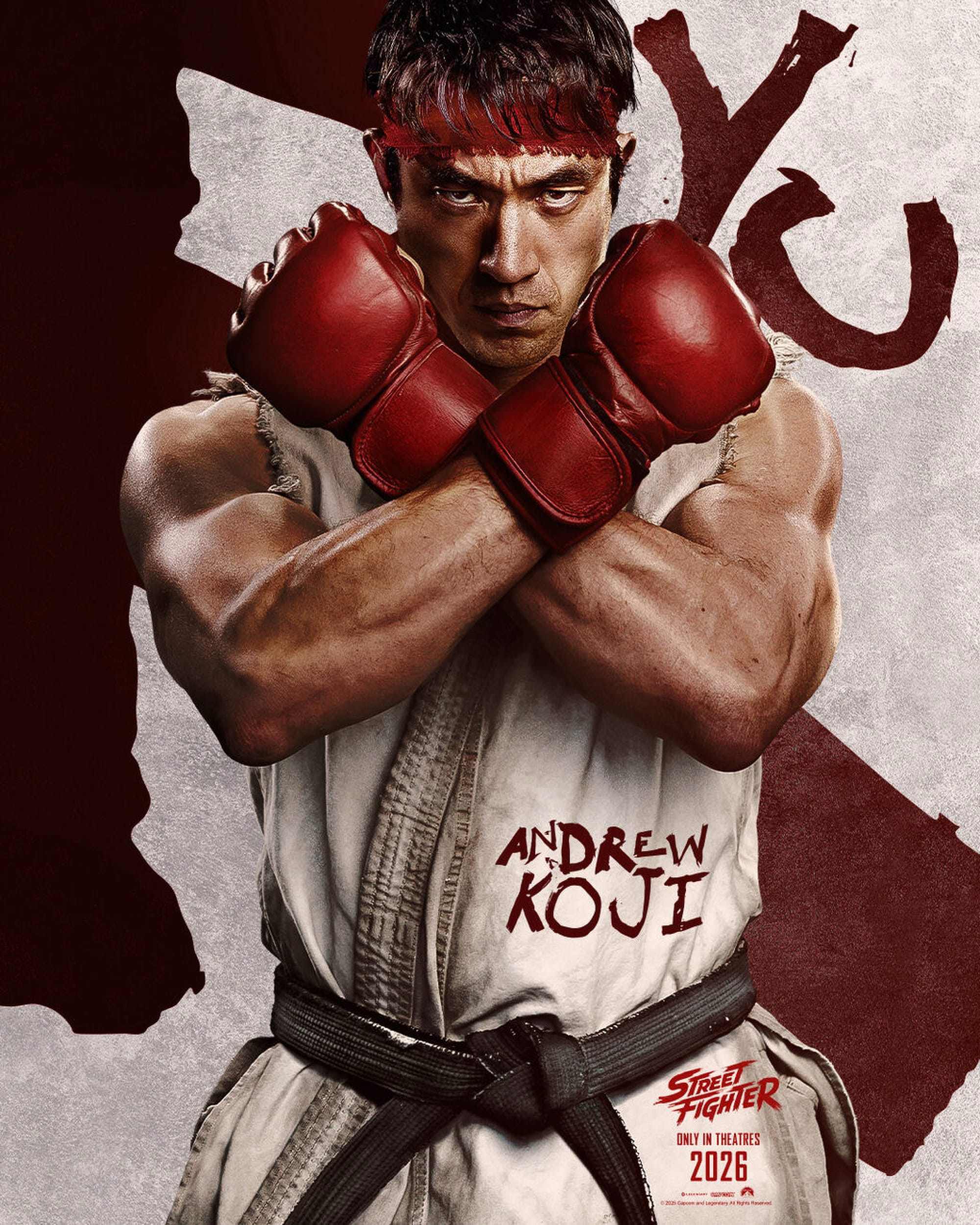
Again, the night I saw Street Fighter, I had a lot of fun. I thought there were some neat fights, and that the casting was (mostly) quite strong (absent a rancid misstep involving a manosphere dipshit). Andrew Koji is probably the best pick for Ryu we were ever gonna get, and Noah Centineo was solid as Ken. Hell, Cody Rhodes was disarmingly charming as an unhinged, homo-erotic take on Guile. And many of the other members of the cast were fairly well-served in small roles that still gave you enough to appreciate what the character was all about.
Do you see it yet? The thing I’m not talking about?
I told myself I had a good time, that it was good. And I did laugh. I laughed a lot. I laughed enough to cover up that subtle ick, that fundamental ache. But eventually, when the movie ended, as the memory of the laughter faded, the ache remained.
When I was willing to stop pretending and pay attention to what I actually felt, rather than what I was supposed to feel, I could see the issue clearly. While I have been a longtime Street Fighter fan, Street Fighter has never been for me, no more than the movie was for Chun-Li.
You see, therein lies the problem: in Chun-Li, in Cammy, in the Dolls. It’s in the women, and how the film doesn’t do right by them.
Ken and Ryu are great. Guile and Dhalsim are great. Vega and Balrog are great. Zangief and Honda are great. Blanka is…a choice, but at least they’re taking swings. Even Dastmalchian’s take on Bison worked for me, though I know that wasn’t true for everyone.
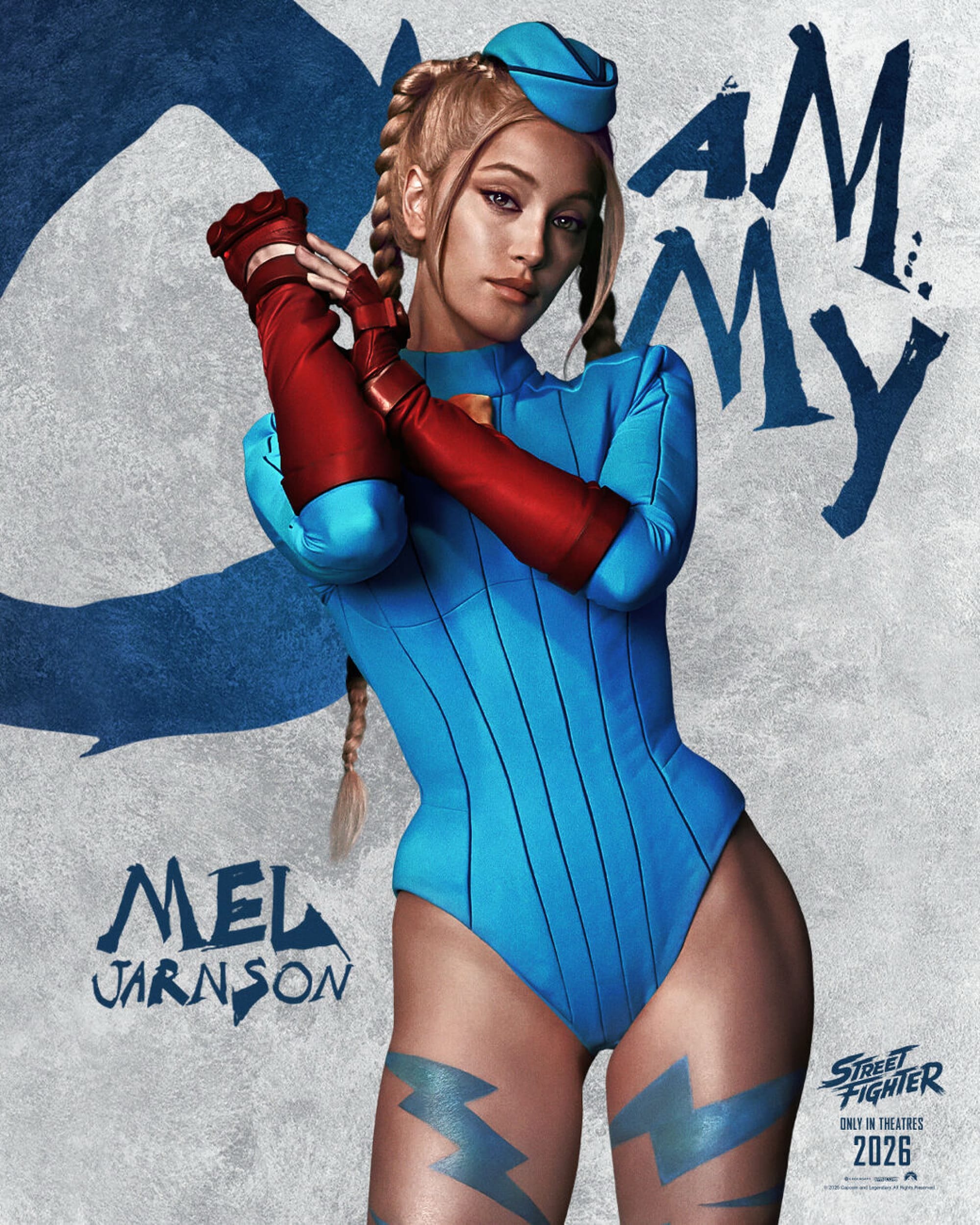
Meanwhile, Cammy is a hollowed out shell of herself. Her film iteration acts nothing like her game incarnation, so while I’m certain Mel Jarnson is doing good work, it’s not the good work of realizing Cammy on the screen. Her Cammy is a malicious co-conspirator to David Dastmalchian’s M. Bison, rather than the amnesiac soldier grappling with a sordid past that Super Street Fighter II first introduced us to. It’s certainly a choice that, in a film so centered on the Street Fighter II era, Cammy’s character is instead either rewritten as a willing villain, or rolled back to an era of subservience to the man who brainwashed and abused her. Either way, it’s problematic that Kylie Minogue’s Cammy is somehow a more faithful interpretation.
Chun-Li fares better, but not by much. Her story is broadly translated intact from II, complete with the tragic death of her father. However, it doesn’t go anywhere. She has a whole arc that builds to a showdown with Bison, a showdown that she loses but survives. It seems inevitable that they will face off once more, this time for keeps. But then the film ends before she can run it back, the fulfilment of her arc relegated to a sequel that almost certainly won’t get made.
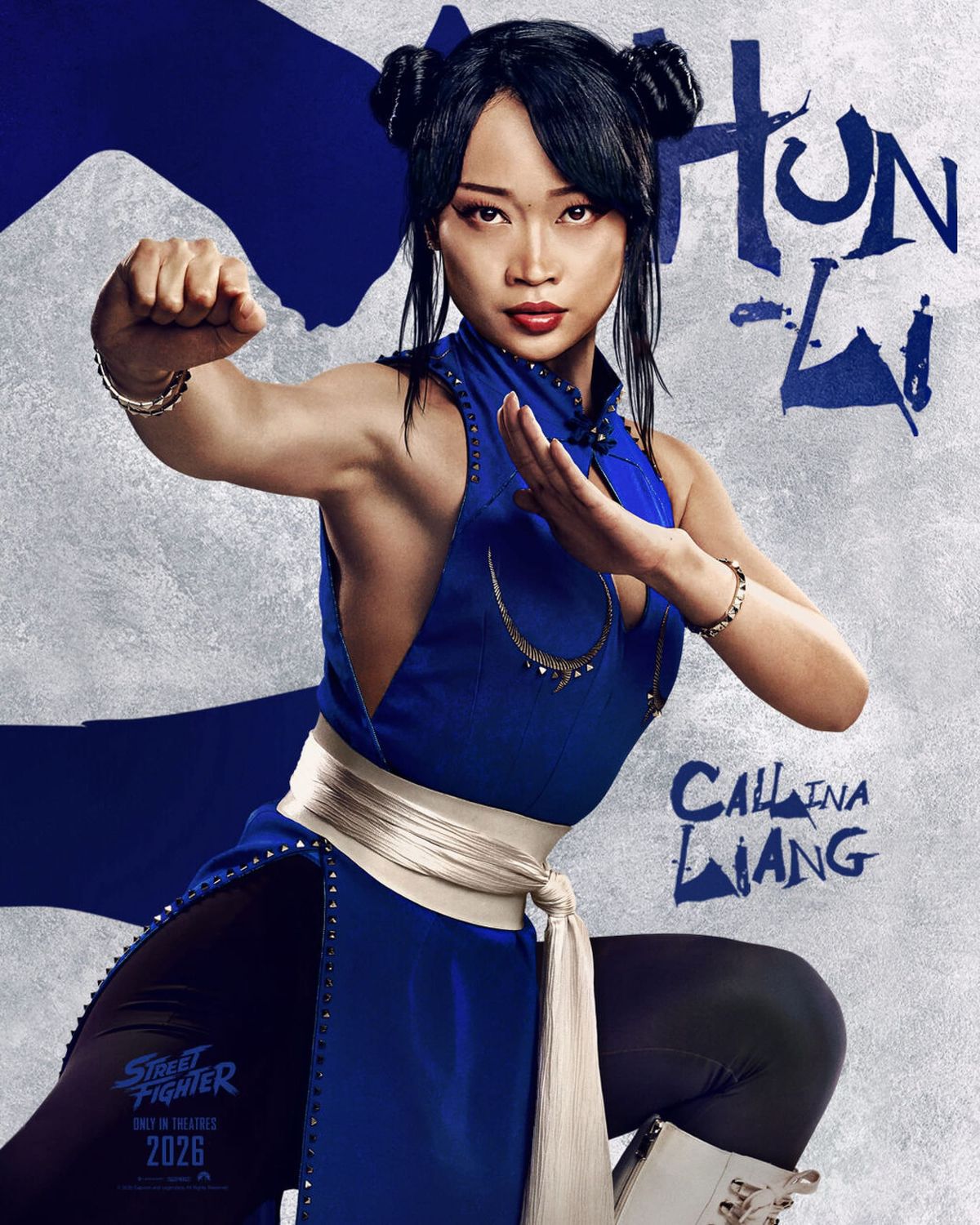
Let me be clear: Callina Liang is excellent in the role. I think she’s just about as perfect as Andrew Koji was for Ryu. But there is a whole ocean of difference between the degree to which Koji is being empowered to show off versus the way Liang is forced to make the best of lesser material.
What else can I call this but misogyny? It’s not necessarily an intentional or conscious effort (though the Dan Hibiki casting makes one wonder), but it is most certainly a product of a creative landscape that sees the stories of women as a stretch goal, not a core strategic focus. And that’s frankly the most charitable interpretation.
Now, this is hardly my first rodeo with a fighting game franchise and entrenched misogyny. I spent most of my life in Central Florida, and I have been to a lot of locals for a lot of games, Street Fighter included. Men are shitty to women, and about women, in these settings with great frequency, even when organizers are trying to make a more welcoming place. It’s better than it used to be, but it was still a problem the last time I showed up to drown in pools.
But it isn’t just the fighting game community, and it isn’t just the culture of fandom around the games. The problem starts in the games themselves. If men are terrible in a competitive space, well that’s just water being wet, more at 11. But if the rot extends to the games themselves, then it becomes altogether harder to reckon with, because it means that the lack of care for the feminine perspective is baked into the DNA of the work. And I’m sad to say that the rot most certainly does extend.
The men of Street Fighter are allowed to have lives. They have histories that are entirely their own, or shared primarily with other men. There are a lot of men on the cast with game narratives that center themselves, or otherwise focus on masculinity, men, maleness. The Street Fighter II roster alone is awash with compelling men, whether it’s Ryu and Ken’s brotherly bond, Guile’s complex relationship to Charlie, or Sagat’s tumultuous journey towards personal growth. Certainly, the games do dip into stereotype more than a little (just look at Zangief and Dhalsim), but the men are still compellingly written enough that they drew in millions of fans.

Brothers in arms
If you ditch the guest-characters, the one-appearance wonders, the spinoff casts, and the clones, you’re already looking at a much thinner roster of ladies. Some of the men of Street Fighter get eliminated by those provisions too, but many of the ones that remain are making consistent appearances in almost every game. Meanwhile, among the women, we’re left with just eight characters, and many of them still aren’t what I would call good representation. Many of them center men in their own character stories, and the sexualization of teen girls and young women is rampant.
Here are some examples:
I love Sakura, but her whole thing is being obsessed with Ryu, who is a man. Also, she’s a teenager. So she’s a teen girl obsessed with a grown man.
I love R. Mika, but her whole thing is being obsessed with Zangief, also a man. She’s not a teenager, but just barely, and she’s already been the subject of controversy for over-sexualization.
I love Ibuki, but she is yet again a teen girl, and a distressing amount of her story is about trying to be a normal girl so she can meet boys.
I love Elena, but her design has received some legitimate criticism over the years, on top of her rather simplistic character story. Also she’s a teen girl who barely wears any clothes, and is a graduate from the Ororo Munroe School of Exoticizing African Women As Nature Shamans.
I...am honestly somewhat ambivalent to Rose, but I certainly don't hate her. However, she's one of the more egregious examples of a female character existing to be defined by a man. Her whole thing is to be a feminine counterpart to M. Bison, one who uses Soul Power instead of Psycho Power. Her soul is literally bonded to Bison's, and her narrative purpose in her debut is to give Bison a body to possess when his is destroyed. She's also a pretty blatant reference to Lisa Lisa from Jojo's Bizarre Adventure, so I can't give points for originality at all.
I will give due credit to Karin, of all characters. Across her two appearances, she has had respectable character development, and her story has not centered men. She’s got a defined personality, and she gets a fair amount of focus in Street Fighter V’s story mode to flesh out her character. She is yet another conventionally attractive teen girl, but she is not as sexualized as some of her peers. I would say we had found a real winner, except Karin wasn’t created for the Street Fighter games. She was created by Masahiko Nakahira for the Sakura Ganbaru! manga that tied into the Street Fighter Alpha series. She was added into the game canon with Alpha 3, and has since only appeared in Street Fighter V.
I truly do love Juri. I think she’s great. I also recognize that her backstory boils down to “what if Chun-Li was evil?” A super fun character, but her only contravening character trait is that she also hates Bison. Just like Cammy. Just like Chun-Li.
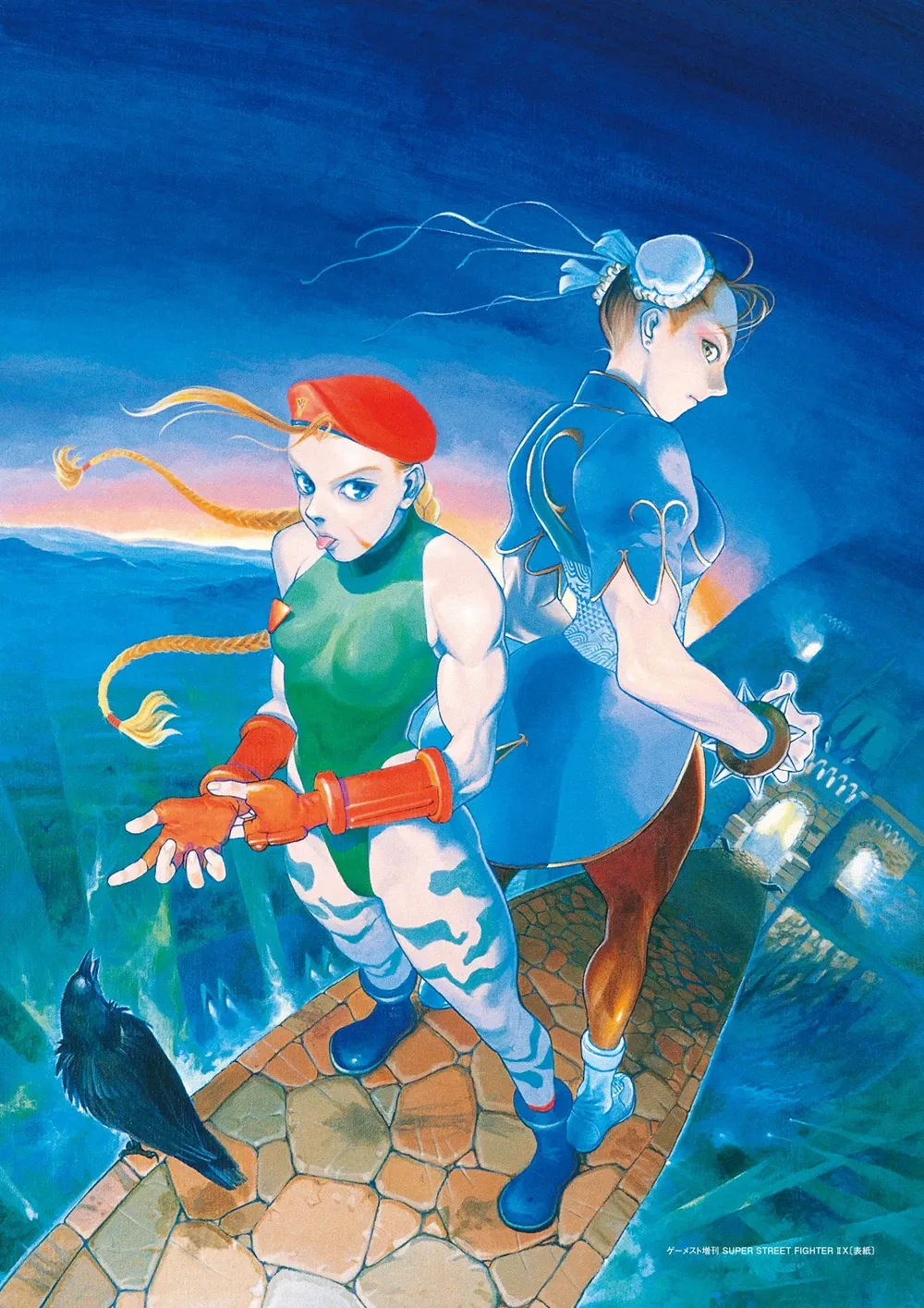
And thus are we left with Chun-Li and Cammy, the first two female Street Fighters. Both defined by men that gave them life, though Cammy’s “father” did so non-traditionally. Both defined by an opposition to M. Bison. Both forever unable to obtain the catharsis they so richly deserve, because neither woman ever gets to canonically defeat Bison. Both forced to let go of the desire for revenge and turn instead to helping the innocent (for Chun-Li that means training children, for Cammy it means saving her fellow Dolls).
It’s the same story, just with slightly different details. And it ends the same way: with a good character getting neglected because she’s a woman.
I wanted to like the Street Fighter movie, I really did. There’s this stereotype of women in games criticism as shrieking feminist harpies who nitpick everything to death so we can kill the patriarchy. It should go without saying that it’s not true, it’s never been true, and it’s offensive.
The truth is that we’re fans. We wouldn’t be here if we weren’t. It’s not like there’s money or fame to be gained from it, and there never really was.
We do this because we love these games.
…even when these games don’t love us back.
I'm not stupid. I know the score. I know that this whole industry isn't for me, isn't for us. But there's a part of me that's still that little girl, having to pretend to be that little boy, who drew some strength from Chun-Li. That's not an easy thing to shake.
So yes, I wanted to like Street Fighter. And for a few hours after the premiere, I almost managed to convince myself I did, because I really did want it so badly.
I wanted a version of the film where Chun-Li gets to finally avenge her father, or at least be the one who chooses to let that thirst for revenge go. I wanted a film where Cammy gets to rescue her Doll sisters.
And don’t you dare tell me about canon. Don’t tell me “But in canon, Chun-Li and Cammy don’t do that.” First of all, I know the canon, probably better than you do. Second of all, the canon isn't good enough.
If the film cared about canon, Bison would’ve met his death at the hands of Akuma, who would then NOT be defeated by Ryu. If the film cared about canon, Chun-Li would’ve been in the actual tournament, not just operating behind the scenes. If the film cared about canon, Cammy would’ve already been fighting against Bison.
If they can change the canon so Bison survives, so that Ryu defeats Akuma in single combat, so both the women are sidelined, why can’t they change it so the girls get a W? Why can’t they let the ladies get what they want?
It’s because the people who make the decisions don’t want to do it. They don’t care to. They might not have even considered the possibility.
They’ll let us be set-dressing. They won’t let us be winners, not unless the men can be winners first.
I’m done convincing myself that’s enough.
Edit: The original version of this piece neglected to mention Rose, a character who appeared in multiple games in the series.