How Becoming a Teacher Made Me a Better Game Master
I wear many hats on a given day. I’m a teacher, essayist, critic, author, activist, wife, sister, daughter, mentor, friend, advisor, shameless flirt, sometimes girlfriend, occasional lover, gentle dominatrix, bratty submissive, and general pervert, on top of being a scifi and fantasy nerd, a comics fan, a JRPG enthusiast, and a total fighting game freak. As I said, many hats.
But one of my very favorite pieces of metaphorical millinery has to be that of the Game Master. It’s for one very clear reason: when I am running a TTRPG (TableTop Role-Playing Game) for my friends, I get to wear all my other hats at once.
Some have limited utility. Some are useful in how they inform my ability to embody various characters and not much else. This is hardly useless, but is more of a party trick than something paradigm-defining.
Some end up helping way more than one might expect. The tools that allow one to domme effectively have more than a little crossover with the skills needed to run a good game. You have to stay aware of the control you have over your partner/s. You have to monitor their wellness carefully, and effectively listen to what they’re wanting and needing. You have to negotiate boundaries, and build strong systems of communication. Sometimes there are dungeons involved.
But one hat continues to prove integral to good play, above and beyond all others. In all my years as a GM, I’ve gotten the most use out of my experience as a teacher.
I became a teacher during the dark days of 2020.
I had been doing some freelance copy-editing and copy-writing to get by, and I was just starting to get my feet under me. I had recently wrapped a pretty substantial contract to help build out the text on a startup's website, and they had given me a fairly lucrative contract (lucrative enough that I suspect they hadn’t investigated standard rates for the industry). I was all too happy to take money from some tech bros high on a venture capital infusion. Things were looking up.
Fellow freelancers likely know where this is going. When Covid hit, that startup went belly up faster than I could blink. I was left broke, with nothing to show for weeks of work and a plague-derived economic collapse making future work tenuous.
I had to get a real job.
Now, for those of you who were not part of the workforce in 2020, jobs were not so easy to come by. A lot of industries were doing essentially no hiring. Freelancing had always been a shaky career path at best, but in 2020 it became untenable.
It was an act of desperation that made me start applying to teaching jobs, because it was the last thing I had ever wanted to do. Both my parents were teachers, and both my maternal grandparents too. I was busy running away from my family, from their culture, from their faith, and, at least prior to 2020, from their profession. But the siren song of a job with a steady salary and benefits proved to be a potent motivator, and by September I was starting a new job as an English teacher at a Title I high school in Orlando.
I’d been playing TTRPGs since way before I was a teacher. The first time I ever encountered a proper TTRPG was when I was no more than twelve. I found a bunch of AD&D (that’s Advanced Dungeons and Dragons) materials in my grandparents basement. I assume they belonged to my uncle, the resident nerd of the prior generation.
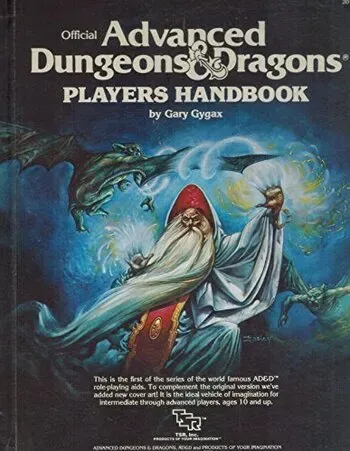
I read the books obsessively, but I never got the chance to actually play a game of AD&D. My first time playing wouldn’t happen until high school, when a few friends and I surreptitiously played a couple sessions of D&D 3.5, a well-liked and deliciously granular predecessor to the wildly popular 5e (4th Edition was a whole thing we don’t have time to get into). That fizzled out soon, and the combat-first ethos of the other players had failed to endear me to the system.
I wouldn’t actually fall in love with TTRPGS until I understood the full breadth of what they could bring to the table. That wouldn’t happen until college, when a group of dysfunctional friends gathered around a table and made some real magic. The secret sauce, so to speak, was the introduction of narrative and passion therein. Previously I had possessed Systems and Lore, but that campaign made me understand the power of Collaborative Story. I couldn’t realize the full beauty of a well-realized TTRPG campaign yet, but I started to sense the shape of it.
It was just a few short months later that I took the driver seat for a session. It was the infancy of the 5th edition, and our group decided to try out the Starter Edition. Our usual DM (Dungeon Master, the most well-known of the many words different systems use instead of just saying Game Master) didn’t want to run the game, so I volunteered. I pored over every inch of the new rules, read the scenario exhaustively, made plans upon plans upon plans. I crafted a narrative, calibrated encounters, developed NPCs. I put hours and hours of work into it.
And when the day came…I was fucking terrible.
Nothing went according to plan. The players didn’t go where I wanted, didn’t react how I expected, didn’t appreciate what I created. The group left that day far less enthused for the upcoming edition, and I felt like it was all my fault.
The group fizzled out not long after. Not due to anything I did, to be clear. The DM started hooking up with the girl one of the players was obsessing over, if I recall correctly. And honestly, that was fine. I would find other groups, and play a lot more Dungeons and Dragons, and other TTRPGs to boot. But I would always feel a little off-balance, as if I was trying too hard and getting not far enough.
I would even take the GM seat again, although my next attempt was only slightly better than the first. I tried my hand at a homebrew pirate setting during Summer 2016, and while I wouldn’t call it a resounding success, it did do me one favor: it solidified a connection to a group of friends and players I had met at law school. That would end up being incredibly crucial to my development, as a player and a GM.
But that wouldn’t pay off for a few more years, after I had a few months of teaching under my belt.
During my first year teaching, I experienced a true trial by fire. By October 2020, I wanted to quit, not because there was any one aspect of the job that was outside my capabilities, but because there were too many different aspects of the job for me to manage all at once.
Here are some of the many different challenges you have to overcome if you want to become a quality educator.
First, you have to be empathetic. You must be able to work with students, communicate with them effectively, and understand their wants and needs. You also have to work comfortably with other teachers, administrators, assorted staff, and parents. You have to possess a robust sense of empathy, but also the ability to assert and enforce your own boundaries. Go too far in one direction and you can’t connect to the kids. Go too far in the other, and you burn out.
Second, you have to be prepared. If you walk into a classroom planning to wing it, be prepared to have a bad time. You need to know the material front to back. You also need to know exactly what you are trying to accomplish on both the micro and macro scale, which in practice means you need to exactly what skills/information you have to convey over the entire year, and which ones you are working on in individual class sessions. You will have to preemptively develop activities to convey that knowledge, and assessments to determine if it has been passed on.
Third, you have to be adaptable. Even though preparation is key, no battle plan ever survives first contact with the enemy. When you are in a classroom, shit happens. Students are absent or late. Projectors fail to turn on. Pencils break. Sometimes Google is just down, and for some reason everything is Google. Not to mention the interpersonal conflict. I have had students threaten to stab other students like…seven times, including earlier this week.
Fourth, you have to be centered. If you are emotionally unstable, your students will sense it, and you will lose control of your class. Kids need structure, and they need to feel safe. If they don’t have those things, they won’t be able to focus on learning.
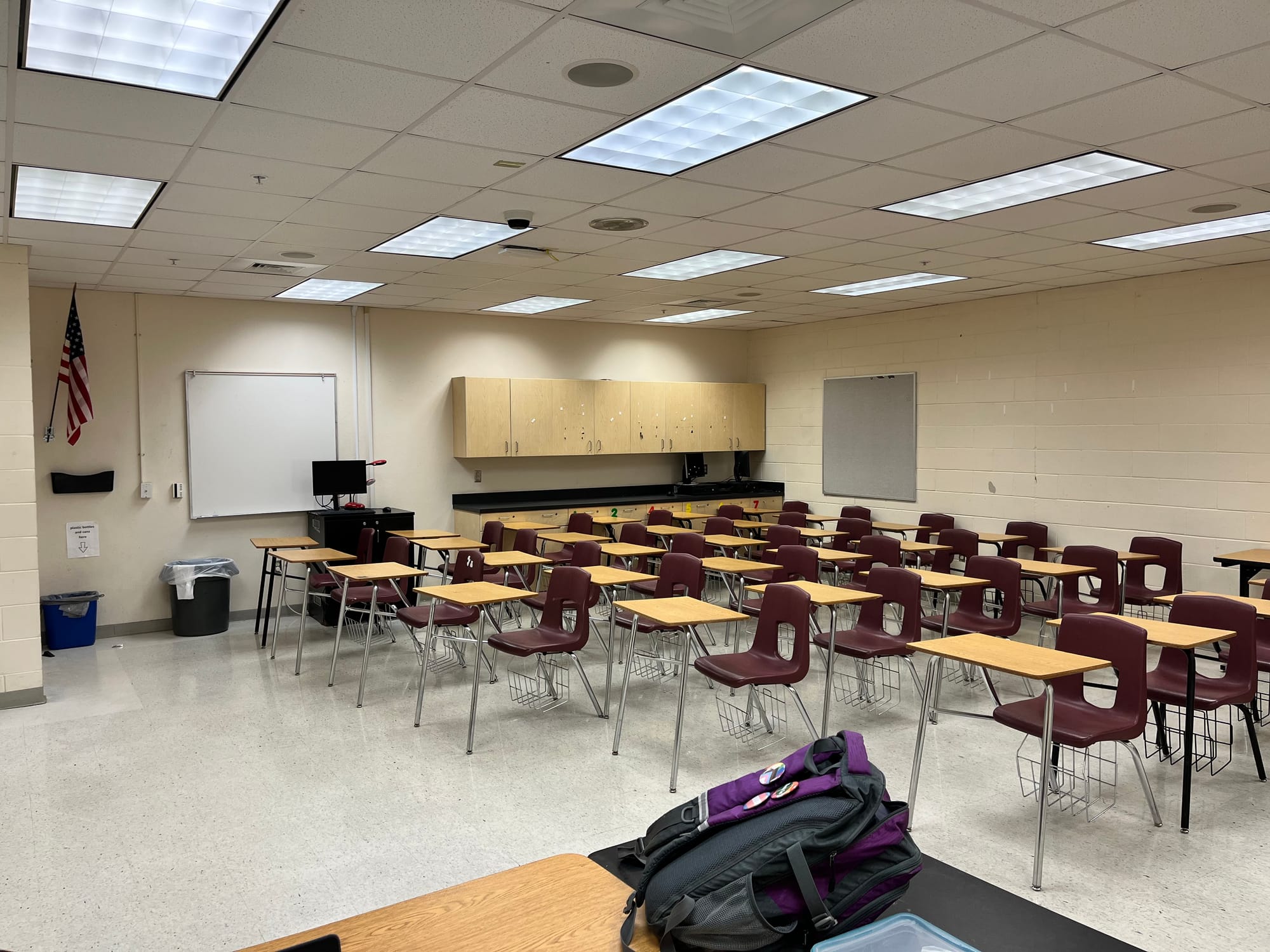
When I walked into a classroom for the first time, I was…none of those things. I was trying my best, but my best was not remotely good enough. It took months upon months to develop even basic competencies in these areas, and everyb it of growth was hard fought.
It sometimes felt like I was learning more than I was teaching. But the things I was learning had a much grander impact on me as a person than I realized at the time.
The first time I ran a TTRPG after my career change was Winter 2021, mere months into teaching. My friend group from law school, with whom I’d already played a lot of D&D, started tossing around the idea of another campaign. We had only recently wrapped one (not DMed by me), an exciting account of the struggle to prevent the resurrection of a dark god. We had liked some of the darker elements of the campaign, and so the conversation turned to a discussion of how we could follow it up.
“What if we played Strahd?” I don’t even remember who actually asked, but there was an immediate interest. Curse of Strahd is one of THE adventure modules for Dungeons and Dragons, since way before the modern era of the game. It’s the tale of the cursed land of Barovia, ruled over by the vampiric Strahd von Zarovich. It’s D&D’s riff on Dracula.
With a modern re-release for the 5th edition, it was an appealing option. At the time, most of us had never tried any version of the iconic trip through Barovia, and the prospect of a darker, horror-themed campaign was more than enticing. The only question was who would run it. Our usual DM needed down time after the recently-completed campaign, and so it fell to one of the rest of us.
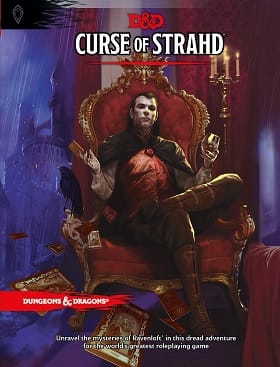
I was surprised at myself when I volunteered to take on the responsibility. I liked DMing, but I would have been lying to myself if I insisted it had always been a positive experience. Yet I was certain this time would be different.
Once more, I pored over every inch of the rules, read the scenario exhaustively, made plans upon plans upon plans. I crafted a narrative, calibrated encounters, developed NPCs. I put hours and hours and hours of work into it.
And this time it was a massive success. A trial session became a regular commitment, became a full-fledged campaign. Everybody was so into it that the relatively bare-bones sandbox of Barovia quite quickly grew too small for our ambitions. The Curse of Strahd module became a mere jumping off point for an epic Ravenloft campaign that spanned over a year of weekly sessions. The foundational vampire narrative grew into a sweeping critique of the parasitic dangers of wealth and power left unchecked, with Ravenloft a stand-in for capitalism and Strahd the billionaire it had warped around. My players each experienced dedicated character arcs, growing from a group of tattered misfits into the heroes of the realm.
We laughed. We cried. We developed a wealth of in-jokes. We bonded as a group. It remains a highlight of my time with TTRPGs. And it was so, so different from what came before.
Now some of that came down to player fit. This was a group with better social cohesion, and that most certainly matters. But the much larger shift was in my own understanding of what it meant to run a game.
It was just teaching. What you’re really doing when you run a game is teaching your players how to play it. More specifically, when it comes to narrative-heavy TTRPGs, you are teaching your players how to tell a story together.
Let me list the ways that having an educator’s mentality helped me at the table:
First, I learned to be empathetic. You must be able to work with your players, not against them. You are all present to have fun, but you won’t have that fun if you can’t see eye to eye. The Game master has to be the bridge between players AND the arbiter of disagreements. If you can’t engage with empathy, your table will implode. If you can, your players will feel safe, and that will help them begin making choices that they think are interesting, not just ones that are safe.
In practice, that meant that I developed bonds of trust with my players, learned what they aspired to, and thereby found ways to help them make that happen. To help a player stare down evil or protect the innocent can offer them a powerful catharsis.
Second, I learned to be prepared. If you sit down at the table, you better have a plan. If you don’t, you risk everything from player boredom to a Total Party Kill. You need to have a rough idea of the stats of all your players. You need to know what spells and abilities they possess. You need to know the stat blocks for every enemy you field. You need to know the actual rules, which means you need to actually read the rulebooks. And you need all of this so that you can develop encounters for your players that they can handle, and will feel good about handling. You need to ride the edge of challenging them enough that they feel accomplished for winning, while not stacking the deck until they collapse from the weight. Being prepared reinforces the table’s trust in you. They will play bolder if they know you have a plan to manage it.
This often meant preparing difficult combats, but sometimes it also meant doing the prep work to let your players strut their stuff. If I know the warlock is about the get access to Fireball, you had best believe I'm throwing a bunch of flammable enemies together to let them enact their power fantasy.
Third, I learned to be adaptable. You cannot be prepared for every single eventuality. What happens if a crit drops the healer unexpectedly? What happens if the players lock down an enemy that was supposed to get away? What happens if they decide they want to seduce the ominous NPC in the corner instead of tailing him back to the enemy hideout? You can’t have pre-developed answers for all of these scenarios, so you better hope your improv game is on point. It’s not a terrible thing to be unprepared for every eventuality, or even to let your players know that you aren’t prepared. What can get you in trouble is failing to volley when a player sends you something unexpected. Because if you can’t “yes, and” player choices consistently, then players won’t bring their A-games to the choosing.
If a player drops your boss in the first round of combat, you need to be ready to pivot. What happens the remainder of the session? How can you make their success matter, while preventing it from depriving them of play time?
Fourth, I learned to be centered. If you are emotionally unstable, your players will sense it, and you will lose control of your table. Players need structure, and they need to feel safe. If they don’t have those things, they won’t be able to focus on playing.
I kid a bit there at the end, but there’s truth to it. The RP in TTRPG stands for Role-Play, and role-play requires intimacy. Intimacy requires vulnerability. Vulnerability requires trust. You can get some people together around a table and roll some dice to kill some imaginary enemies, but if you want to truly explore the narrative aspects of the TTRPG, you have to be a rock that your players can brace themselves against. If you give them that, you can show them the way towards a type of collaborative storytelling that you just don’t see in any other medium.
Do you have to be a teacher to be a good Game Master? No. I can just tell you that becoming a teacher is why I’m good at GMing. You also don't need to stress and decide you can't be a good GM just because you don't feel confident in your skills just yet. That's not the point.
If you take anything away from this piece of mine, let it be this:
You have been preparing to role-play your whole life. You have learned a thousand tiny things that inform how you can best engage with players and with a game at your own table. I've described my path to confidence and competence. Don't try and walk it: walk your own. Go and become your own best self. Develop your own empathy, your own preparedness, your own adaptability, your own calm. Go develop skills that I'm still struggling with, or even ones I haven't even thought of.
When you're done, find a table, pull up some chairs, and try making some magic of your own.